
Our Specialities
Explore our areas of care, the health concerns we assess and how Ayurvedic care is planned around your needs—from consultation through treatment and follow-up.
01
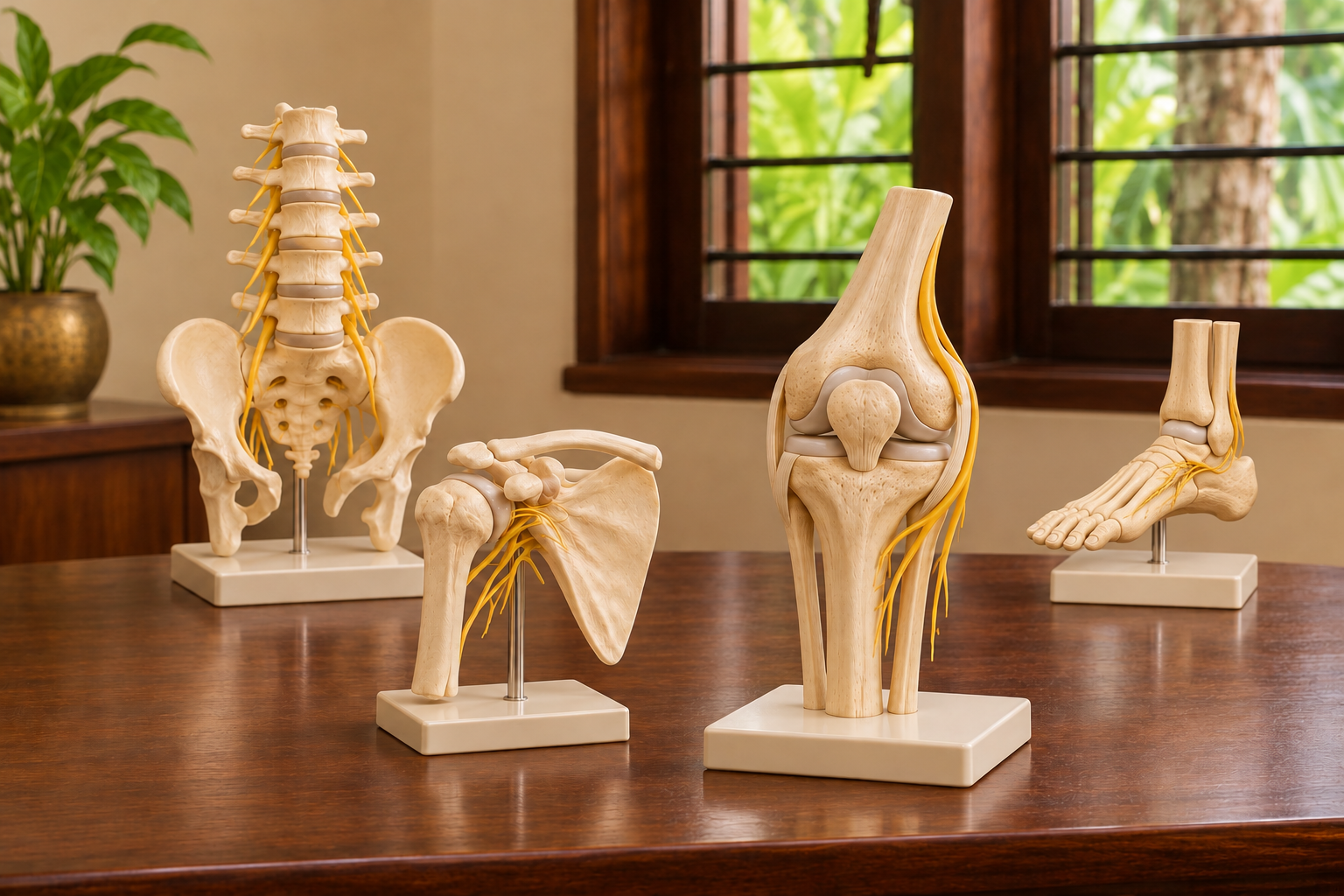
Ortho & Neuro Ayurveda
Pain, stiffness and nerve-related symptoms can affect movement, sleep, work and independence. At Keralam Ayur Vaidyasala, assessment considers both the concern itself and its effect on everyday activities, alongside previous diagnoses, investigations and current treatment.
The purpose of care is discussed individually, with realistic goals and regular review. Ayurvedic medicines and therapies may be considered where suitable, with attention to existing medical advice and rehabilitation needs.
Area of Care
Joint pain and stiffness
Consultation may address concerns involving the knees, shoulders and other joints. Assessment considers pain, swelling, movement restrictions and difficulties with activities such as walking, climbing stairs or getting dressed.
Neck and lower-back concerns
Persistent or recurring discomfort is assessed in the context of work, posture, previous injury and available reports. Recommendations take account of symptoms extending into the arms or legs, as well as local pain and stiffness.
Nerve-related symptoms
Tingling, numbness, radiating pain or changes in sensation require attention to their underlying cause. Existing neurological assessments and investigations help inform whether Ayurvedic care has an appropriate supporting role.
Muscle discomfort and restricted movement
Muscle tightness and reduced flexibility may make routine activities uncomfortable. Care planning considers the affected area, duration of symptoms and any injury or medical condition that needs further assessment.
Support alongside rehabilitation
For people already receiving rehabilitation for a diagnosed condition, any Ayurvedic support is considered in relation to their wider care plan. Progress is reviewed through comfort, movement and daily function, with coordination where appropriate.
02
Infertility & Women's Health
Reproductive health deserves careful attention, clear information and space to discuss concerns without judgement. At Keralam Ayur Vaidyasala, consultation provides an opportunity to discuss menstrual health, difficulties conceiving, changes around menopause and recovery after childbirth.
Fertility care involves both partners. We consider the history and available investigations of each partner, previous treatment and any ongoing medical care when discussing the appropriate role of Ayurveda. Recommendations are explained individually, including where further assessment or specialist care is needed.

Area of Care
Fertility concerns — for both partners
A consultation offers space to discuss difficulties conceiving, previous pregnancies, investigations and earlier fertility treatment. Both partners’ histories matter. We discuss the appropriate role of Ayurvedic care, including how it may fit alongside ongoing specialist treatment.
Menstrual health
Irregular cycles, painful periods and changes in bleeding patterns deserve individual assessment. Consultation considers when symptoms began, their effect on daily life, existing diagnoses and available reports before care is recommended.
PCOS and related concerns
For those with a diagnosis of polycystic ovary syndrome, discussion may include menstrual patterns, existing medical advice, metabolic health and fertility plans. Recommendations are considered within the wider picture of ongoing care.
Changes around menopause
Changes in periods, sleep, comfort and wellbeing can raise questions during the transition to menopause. Consultation provides an opportunity to discuss these concerns and identify where Ayurvedic support or further medical assessment may be appropriate.
Postnatal care
Care after childbirth centres on the mother’s recovery, rest, nourishment and comfort. Recommendations take account of the type of delivery, healing, breastfeeding and advice from the maternity team, with treatments considered only when suitable.
03
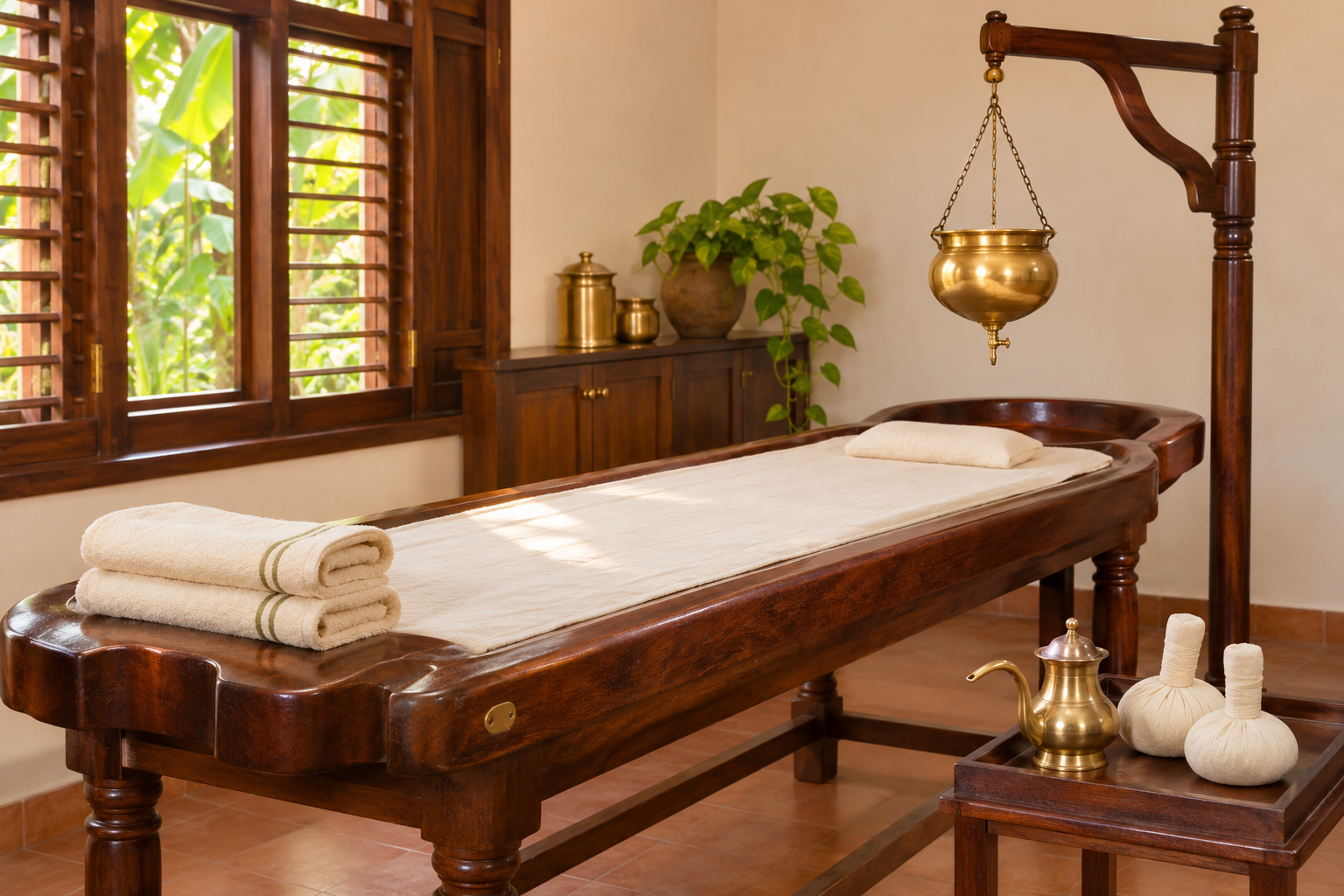
Keraliya Panchakarma Treatments
Panchakarma is approached as a planned course of Ayurvedic care, with assessment, preparation, selected procedures and aftercare. At Keralam Ayur Vaidyasala, the recommendation depends on clinical need, suitability and the person’s ability to undertake the proposed course.
The procedures involved, time commitment and necessary precautions are explained beforehand. A course does not mean that every procedure is required; the plan is selected and reviewed individually.
What Your Care Involves
Joint pain and stiffness
Consultation may address concerns involving the knees, shoulders and other joints. Assessment considers pain, swelling, movement restrictions and difficulties with activities such as walking, climbing stairs or getting dressed.
Neck and lower-back concerns
Persistent or recurring discomfort is assessed in the context of work, posture, previous injury and available reports. Recommendations take account of symptoms extending into the arms or legs, as well as local pain and stiffness.
Nerve-related symptoms
Tingling, numbness, radiating pain or changes in sensation require attention to their underlying cause. Existing neurological assessments and investigations help inform whether Ayurvedic care has an appropriate supporting role.
Muscle discomfort and restricted movement
Muscle tightness and reduced flexibility may make routine activities uncomfortable. Care planning considers the affected area, duration of symptoms and any injury or medical condition that needs further assessment.
Support alongside rehabilitation
For people already receiving rehabilitation for a diagnosed condition, any Ayurvedic support is considered in relation to their wider care plan. Progress is reviewed through comfort, movement and daily function, with coordination where appropriate.
04
General Ayurveda & Wellness
Everyday health concerns deserve careful assessment, especially when symptoms persist or repeatedly return. At Keralam Ayur Vaidyasala, general consultation provides space to discuss symptoms, existing conditions, current medicines and the routines that shape daily health.
Recommendations may include prescribed Ayurvedic medicines, dietary guidance and practical changes to daily habits. Follow-up helps review the response, while recognising when investigations or another medical opinion are needed.

Area of Care
Digestive concerns
Consultation may address recurring indigestion, bloating, changes in bowel habits and appetite-related concerns. Discussion considers symptom patterns, food habits, previous investigations and any established diagnosis.
Metabolic health
People living with conditions such as diabetes may seek Ayurvedic advice alongside their ongoing medical care. Any recommendations take account of current medicines, monitoring and the treatment plan already in place.
Respiratory concerns
Recurring nasal, sinus or respiratory symptoms are considered alongside their triggers, duration and previous assessment. The role of Ayurvedic care is discussed according to the diagnosis and individual circumstances.
Skin concerns
Itching, dryness and recurring skin complaints are assessed with attention to their appearance, duration, possible triggers and treatments already tried. Recommendations depend on the nature of the concern and whether further evaluation is needed.
Daily wellbeing and sustainable routines
Consultation can also address questions about sleep routines, food habits, activity and rest. Advice is kept practical, with attention to changes that can be maintained within everyday life.